GOOSE-2026 & EGGs-2026 H1 Report
Total Net DAO Revenue
$15.9M
H1 2026
Total Foundations' Expenses
$14.3M
H1 2026
Operating Result
$1.6M
H1 2026 · before non-recurring items
Total Result
-$4.5m
H1 2026 · including one-off expenses related to the Kelp incident
Executive summary
This report summarizes progress toward the Lido DAO 2026 goals and the Ecosystem Grant gRequest (EGG) annual grant for January 1 to June 30, 2026.
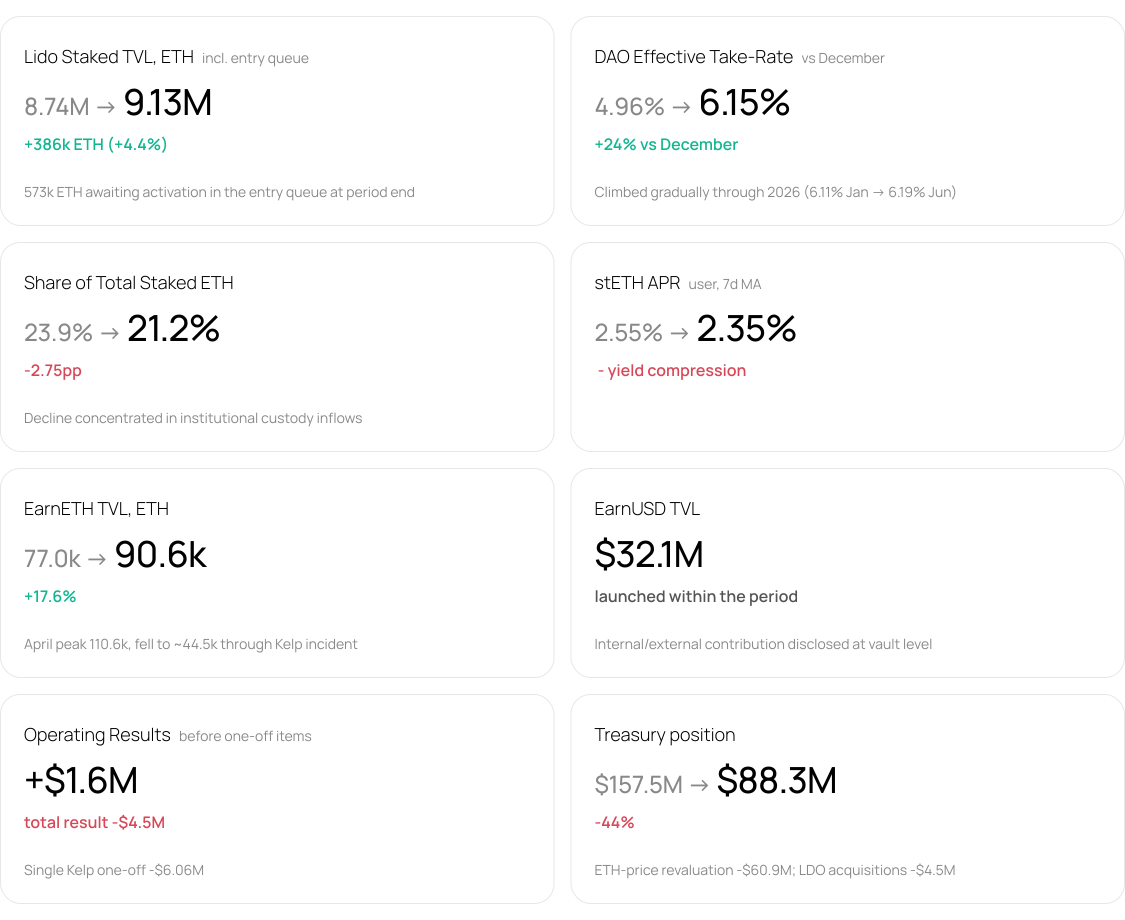
Lido Staking TVL continued to grow despite ETH price decline of 47%, and broader market disruptions due to the LayerZero/Kelp DAO exploit in April. Lido Staking TVL rose to 9.13M ETH, up 386k from the start of the year (8.74M, incl. the entry queue and excl. the exit queue). However, Lido’s staking market share dropped from 23.93% to 21.18%. The overall staking market grew faster; most new capital entered custody and institutional segments, where the Lido Protocol has traditionally been less competitive.
Development objectives were nevertheless met: the Lido Core upgrade was delivered, the DAO take rate grew, and NEST, the automated buyback mechanism, was built. The non-staking product Wisp was also introduced. Operations remained surplus-generating at $1.61M before the Kelp-related one-off expense, which turned the overall result into a $4.45M loss.
Here is how the period unfolded against each of the four GOOSE-2026 goals:
Expand the Staking Ecosystem: Institutional adoption of stETH deepened, while TVL grew by 386k ETH despite overall market share declining. However, overall performance remains below targets in all areas.
1. Adoption of stETH by the traditional financial sector increased steadily during the period, as key integrations and use cases emerged:
- Anchorage Digital became the first federally chartered US bank to custody and mint wstETH, making the asset accessible to holders who require custody by a chartered bank.
- WisdomTree's Physical Lido Staked Ether ETP, Europe's first fully-staked ETH ETP, holding stETH exclusively, reached 20,952 ETH, up 23% since its December launch.
- The US stETH ETF has not launched yet: VanEck's S-1 is still under review.
2. stVaults reached 5,768 ETH, well below the target, with adoption constrained by both the long entry queue and the complexity of B2B integrations.
3. Lido's share of staked ETH ended at 21.18%, down from 23.93% at the start of the year, as market growth increasingly came from institutional and exchange staking segments, predominantly DATs and staking ETFs.
Ensure Protocol Resilience: The Lido Core Upgrade (Curated Module v2, Staking Router v3, and Community Staking Module v3), aimed at reducing the protocol maintenance cost and supporting Ethereum goals with regard to network optimizations, was fully delivered.
- The fee changes voted in at the end of 2025 held through H1, with the DAO share of rewards increasing owing to things such as the SDVT Regular Clusters wind-down, which increased the effective take rate to 6.15% without changing the 10% protocol fee.
- The groundwork for ValMart, the validator market that routes stake by performance, cost, and decentralization, is in place; ValMart launch is expected in early 2027.
Scale New DAO Revenue Streams: Lido Earn has become a multi-segment product suite that now operates two vaults with distinct yield and risk profiles.
- EarnETH closed the period at 90.6k ETH TVL.
- EarnUSD, Lido's first stablecoin vault, reached $32.1M.
However, revenue growth is not in place because the fees were periodically switched off to promote growth, resulting in $0.54M ARR as of June 30.
Explore Vertical Expansion and Real-World Business Applications: Foundations have moved from the research phase to active development: two ideas for low-risk DeFi are being built, and Wisp, the first new product, has already been introduced.
- Research across DeFi has converged on two ideas designed for the low-risk DeFi segment, now in active development (technical and legal delivery timelines, budgets, commercial goals, GTM); they will be presented in the autumn.
- Wisp, a confidential AI agent harness owned by Lido DAO, surpassed 3,000 waitlist registrations.
Financial results: Lido's core operations generated a surplus in H1 2026, despite a declining ETH price that reduced USD-denominated revenue.
Total Net DAO Revenue amounted to $15.9M, while Total Foundations' Expenses were $14.3M, with a positive operating result of $1.6M before non-recurring items. After the DAO’s decision on the Kelp incident one-off, Total Result for H1 was negative at $4.5M.
Spending in underperforming areas was reduced. H1 spending totaled $14.3M, versus an annual request of ~$60M (incl. Discretionary Budget), with full-year spending projected at ~$37.7M. This is below the baseline $41M and down from $45.5M in 2025.
The Treasury position excluding LDO decreased 44%, from $157.5M to $88.3M, valued at the 30 June closing ETH price of $1,569. Of the $69.2M reduction, $60.9M reflects the ETH price decline and $4.5M was allocated to LDO acquisitions (stETH/LDO trades and the LTI reserve); the remainder reflects the negative H1 result and other accrual movements. See the detailed Treasury bridge in the financial overview.
As of August 25, 2026, with ETH at $2,441, Treasury value is ~$121.3M, up 38%.
What Comes Next
In H2, the staking unit will continue to advance growth of the protocol through expansion of usage of stETH by institutions and the DeFi-native user segment, while supporting the consolidation of the validator count on Ethereum via the migration to the Curated Module v2 for the lion’s share of the protocol’s validators. The ValMart launch in early 2027 will further increase protocol resilience and improve its economic profile. The primary objective for H2 is scaling the DAO's new revenue streams: increasing institutional staking TVL, expanding stVaults distribution, and developing Lido Earn to meet its TVL and revenue targets. Wisp, a standalone product, will continue to evolve. Two more products for the low-risk DeFi segment, now in development, are expected to be introduced before year-end.
Intro
This report is organized into two parts.
Part 1 covers progress on the four GOOSE-2026 goals and provides an LDO update. It includes the market context, and a review of each goal.
Part 2, Financial Overview, presents the period’s financial results. It includes the profit and loss statement with product-level performance, the treasury position with separate LDO holdings, and the basis of presentation and accounting policies.
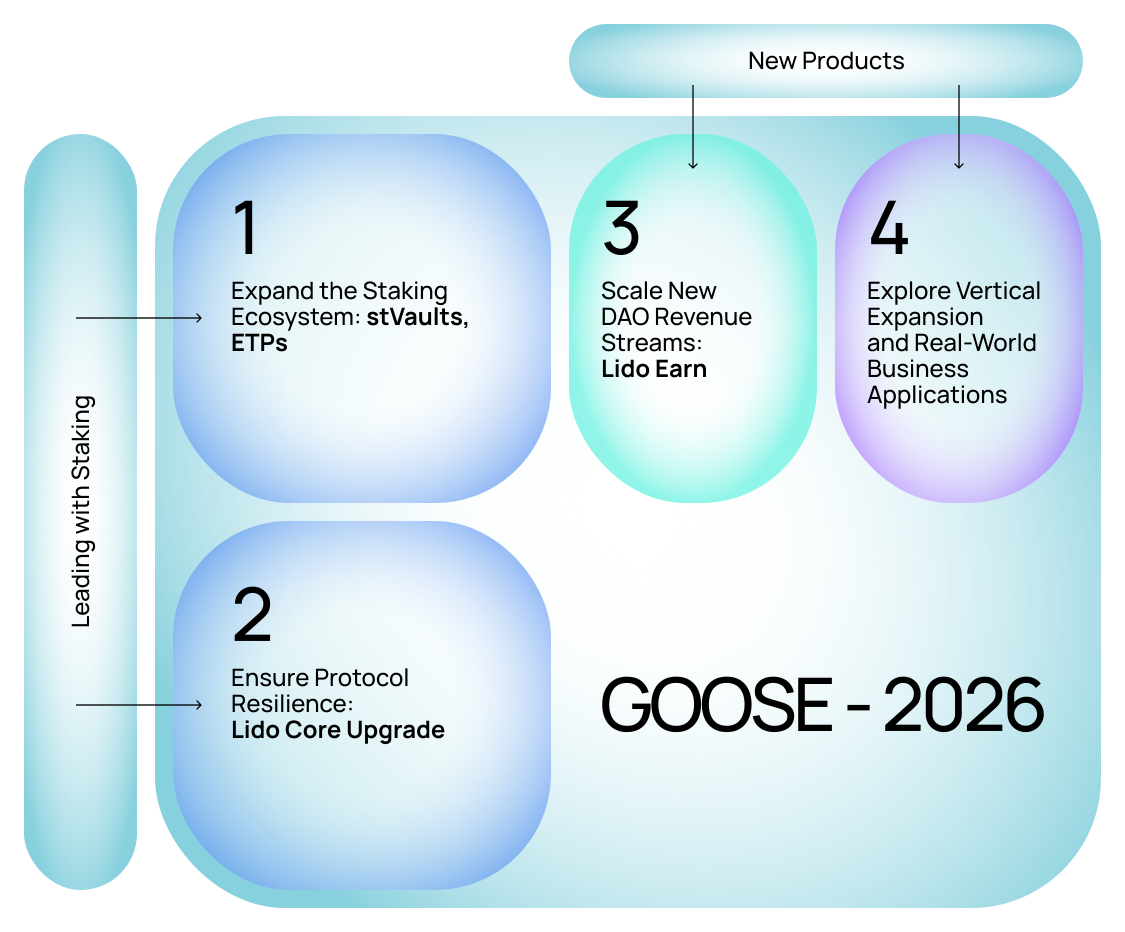
The four Lido DAO 2026 goals (GOOSE-2026) are:
- Expand the Staking Ecosystem (ETPs, stVaults)
- Ensure Protocol Resilience (Lido Core Upgrade)
- Scale New DAO Revenue Streams (Lido Earn)
- Explore Vertical Expansion and Real-World Business Applications
Initiatives not covered by these goals, such as LDO tokenomics and governance, are detailed in the Additional section.
Part 1: Progress on the GOOSE-2026 goals
Market Context
The overall ETH staked market increased, but total value in dollar terms declined, with growth occurring in segments where stETH faces strong competition against centralized alternatives.
Total staked ETH rose 19%, from 36.3M to 43.1M (incl. entry queue and excl. exit queue), with Lido capturing 5.7% of this increase. As ETH/USD fell 47% over the period, the dollar value of the staking market fell from roughly $108B to about $68B, a decline of about 37%.
The Simple LST category, where stETH leads, remained flat through May, then increased to 22.6% by period end due to capital migration away from restaking: EigenLayer’s stETH deposits were undelegated and ether.fi shifted from restaking to liquid staking. Meanwhile, institutional staking rose from 25.9% to 35.3%. These categories represent distinct markets with different participants and motivations.
Staking market composition
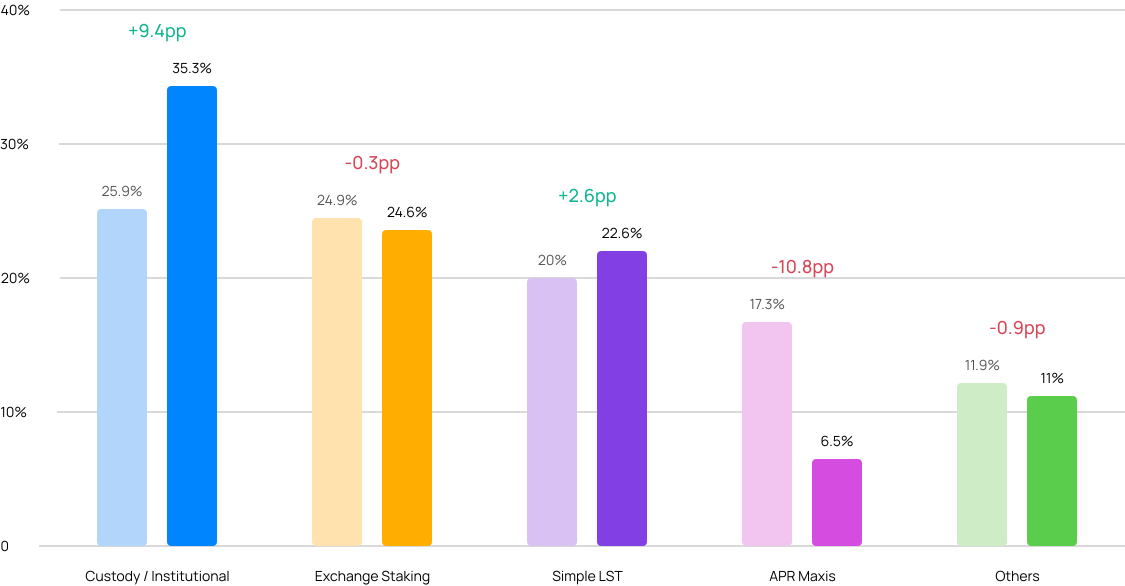
Share of total staked ETH by segment | Dec 31.2025 vs Jun 30, 2026
Lido Share of all staked ETH
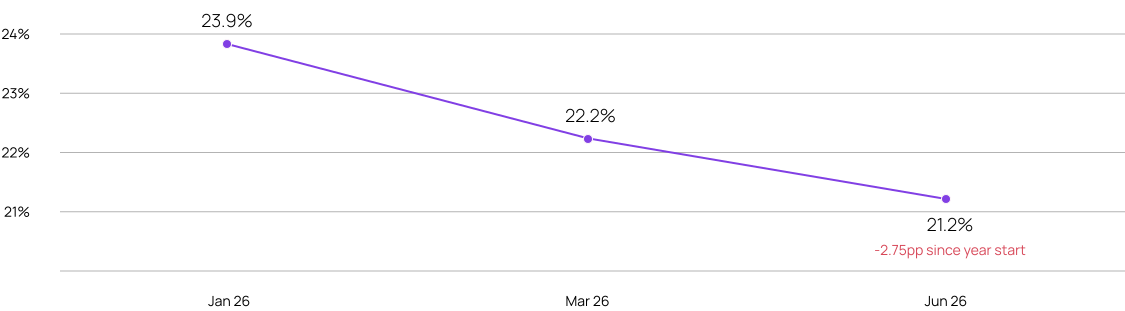
Incl. entry queue | Jan 1→ June 30, 2026
As the staked base expanded, staking APR compressed further, and the entry queue eased from a January peak above 4M ETH to 2.9M ETH at period end, including 573k ETH of Lido stake awaiting activation.
Lido staking share declined, but the fall resulted from new capital entering adjacent segments, not from outflows on its own.
Lido staking market share ended the period at 21.18%, down from 23.93%, despite a growth in protocol TVL from 8.74M ETH to 9.13M ETH. The dilution mostly came from institutional capital entering elsewhere. Bitmine, a digital-asset treasury, gained 10 percentage points over six months. The largest net deposit gainers—Upbit, Binance, Coinbase, Figment, Bitmine, and Kraken—were custody and exchange venues.
Market Position
Top staking entities by share of all staked ETH — June 30, 2026
| Market share, % | Change since year-start, pp | |
|---|---|---|
| Lido | 21.2 | -2.75 |
| Bitmine | 11.5 | +10.06 |
| Coinbase | 10.9 | -0.58 |
| Binance | 7.9 | -1.22 |
| Ether.fi | 4.1 | -1.79 |
| Figment | 3.7 | -0.48 |
| Kraken | 3.4 | -0.26 |
| Grayscale (via Coinbase) | 3.1 | -0.05 |
| Everstake | 1.7 | -0.22 |
| Upbit | 1.5 | +0.40 |
Following the Kelp incident, demand shifted toward security.
Kelp initiated a DeFi drawdown as leveraged positions were closed and capital left the highest-risk staking segments. EigenLayer restaking also contracted, with a significant portion of capital shifting to simple LST holdings. As a result, the APR Maxis segment share fell from 17% to 6.5%. With increased smart-contract risk, now heightened by AI-driven vulnerability detection, capital moved to providers offering safe, reliable yields. Lido stands out due to its record of no user-fund losses.
Lido responded to these market conditions by increasing focus on two existing priorities: reducing costs for staking and expanding its product line. Lido Earn, stVaults, and vertical initiatives each leverage established trust to drive future value growth, while the mature staking core has limited upside.
GOOSE Goals
Goal 1 · Expand the Staking Ecosystem: ETPs, stVaults.
The GOOSE-2026 goal: Strengthen adoption of stETH and stVaults through active distribution, new integrations, and partnerships, including the expected launch of the staked ETH ETF in the US. Expand the stVaults line with a modular 'constructor' for rapid launch of custom DeFi structured products.
Institutional adoption of stETH deepened, while overall Staking TVL heavily fluctuated due to wider market dynamics.
Lido Staking TVL ended the period at 9.13M ETH, an increase of 386k ETH including the entry queue and excluding the exit queue, with staking share declining by 2.75 percentage points from the start of the year.
| Month | Gross inflow | Gross outflow | Net inflow |
|---|---|---|---|
| Jan | 1,009,889 | 179,329 | 830,560 |
| Feb | 1,634 | 346,496 | -344,862 |
| Mar | 112,945 | 143,360 | -30,415 |
| Apr | 200,542 | 597,272 | -396,730 |
| May | 169,985 | 130,153 | 39,832 |
| Jun | 403,175 | 115,433 | 287,742 |
Net growth of +386k ETH followed a V-shaped path: a very strong +831k ETH in January reversed as ETH prices fell, with the LayerZero/Kelp incident deepening April outflows to −397k ETH. Momentum recovered quickly, with net inflows at +40k ETH in May and climbing up to +288k ETH in June.
Significant progress was made in driving stETH adoption across the traditional financial sector:
In regulated wrappers,
- the WisdomTree ETP, Europe's first fully-staked ETH ETP, reached about 21,000 ETH, up 23% half-over-half;
- the US ETF wrapper explored with VanEck's S-1 remains under review.
Among other institutions:
- Anchorage integrated stETH as the first federally chartered US bank to custody and mint wstETH.
stVaults reached 5,768 ETH, significantly below the target, with adoption materially hampered by the entry queue length.
Main achievements:
- P2P signed the first tokenized stVaults liquidity agreement, totaling 6,000 ETH.
- Custodian coverage expanded further: Fireblocks and Copper stVaults connectors are live
- CactusCustody now supports stVaults, so institutions can hold and use stETH through providers they already use.
One of the stVaults growth constraints was the Ethereum validator entry queue, which exceeded 70 days. Liquidity providers, funds, ETPs, and other large clients continued to value the liquidity stVaults offer, particularly for redemptions, but the staking rewards lost while waiting outweighed these benefits, making deposits economically unattractive. The same queue prevented builders from developing leveraged staking strategies.
Key metrics for the period
| Metric | H1 actual (June 30) | Status |
|---|---|---|
| Total ETH-staking share | 21.18% (23.93% at year-start) | Off track |
| stVaults TVL | 5,768 ETH | Off track |
| ETPs | WisdomTree ~21,000 ETH (+23% HoH) | On track |
Goal 2 · Ensure Protocol Resilience: Lido Core Upgrade
The GOOSE-2026 goal: Deliver Curated Module v2 and Staking Router v3, introducing ValMart, a validator-market mechanic that routes stake by performance, cost, and decentralization.
The Lido Core Upgrade was delivered: Curated Module v2, Staking Router v3, and CSM v3 were finalized in H1, with the onchain vote and release in July.
This set of upgrades aims to help maintain the protocol’s economic resilience, paving the way for a considerably smaller cost base for the core staking protocol, and better unit economics via operator fee competition starting next year. Curated Module v2, which secures about 90% of Lido Core stake, introduces a market-driven operator-economics framework, native support for 0x02 compounding validators, ETH-backed bonding and penalty compensation, and streamlined governance. Community Staking Module v3, Lido’s permissionless module with approximately 750,000 ETH across 430 operators, added the Identified DVT (distributed validator technology) Cluster operator type, with a lower bond and native reward splitting, further increasing the options for node operators who wish to run infrastructure in a decentralized manner.
The fee changes set at the end of 2025 held through H1, keeping the effective take rate at 6.15% without changing the 10% protocol fee, with further increases in DAO share projected.
This improvement resulted from revisions to module economics, which enabled the DAO to set incentives based on each operator's contribution, including decentralization, public-good client work, and enhanced alignment.
The remaining component of the goal: ValMart, the validator-market that routes stake by performance, cost, and decentralization, is scheduled for activation in early 2027, once the consolidation of stake in Curated Module v2 has finished.
Key metrics for the period
| Metric | H1 actual | Status |
|---|---|---|
| Core take rate | 6.15% (from 4.96% in December, +24%) | On track |
| Lido Core upgrade | CMv2 (Phase 1), Staking Router v3, and CSM v3 released in July | Delivered |
Goal 3 · Scale New DAO Revenue Streams: Lido Earn
The GOOSE-2026 goal: Expand to serve diverse user segments with tailored yield and risk profiles, scaling into a strong revenue line.
Lido Earn progressed as a multi-segment product suite that now operates two vaults with distinct yield and risk profiles.
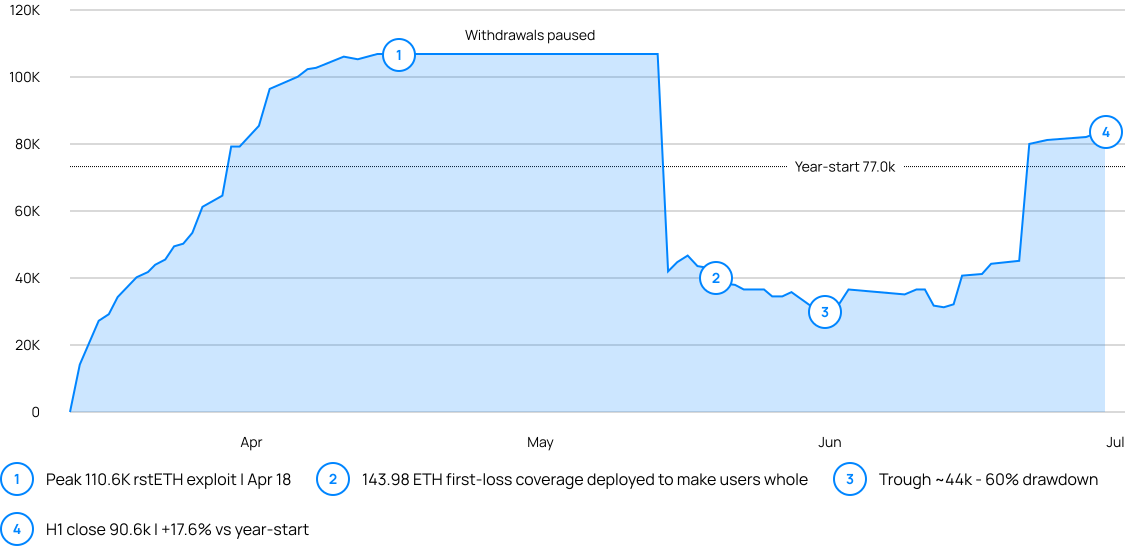
- The EarnETH vault, yielding approximately 4.29%, closed the period at 90.6k ETH, a 17.6% increase from 77.0k ETH at the year's start.
- The EarnUSD vault, Lido's first stablecoin product, yielding approximately 6.73%, launched during the period and achieved $32.1M in TVL. Of this total, $19.5M originated from EarnETH rather than external deposits, so the independent base for EarnUSD remained limited.
Earn products are currently optimized for growth, not near-term fee capture. Selective fee waivers are a deliberate tool to accelerate adoption, improve growth efficiency, and build a strong position in the market. This results in periods of zero revenue but helps secure a strategic position in key segments.
The primary objective for H2 is to attract and retain a significantly larger TVL base.
The Kelp incident reduced EarnETH from an April peak of 110,600 ETH to 44,500 ETH; however, no user funds were lost. Lido DAO joined DeFi United, committing up to 2,500 stETH to address the rsETH deficit as part of a coordinated relief effort.
First-loss protection, approved in March, allocated $3M in wstETH for EarnETH and $2M in USDC for EarnUSD, ensuring the DAO absorbed losses first. A total of 143.98 ETH in coverage fully compensated depositors.
The vault has since recovered above its year-start level, and the risk framework was tested and improved following the incident.
EarnETH TVL
ETH in vault | daily | through 30 June 2026 (H1 close)
Key metrics for the period
| Metric | H1 actual | Status |
|---|---|---|
| Lido Earn | $0.54M ARR | Off track |
Goal 4 · Explore Vertical Expansion and Real-World Business Applications
The GOOSE-2026 goal: Explore real-business DeFi, connecting offchain economic activity to onchain liquidity, through a dual-track approach: running multiple fast, lean projects aimed at producing faster results, balanced with the pursuit of a single large-scale, long-term opportunity.
Foundations moved from the research phase to active development. Two concepts for low-risk DeFi identified during research are now actively developed. The AI harness product, Wisp, continues to evolve.
Wisp is a confidential AI agent harness, owned by the Lido DAO. Prompts are processed in a hardware-secured enclave, ensuring user data remains inaccessible and is not used for training or retention. Wisp runs leading open-weight models locally on the user's device and is available via subscription, ranging from free to $200 per month. Developed in H1, Wisp launched its public waitlist after the period ended and exceeded 3,000 registrations. Additional products are expected to follow later this year.
No revenue is reported yet, as these initiatives remain pre-revenue and are disclosed according to their current development stage.
Additional · LDO
Aligning LDO with protocol success has been a DAO objective since 2025. The necessary architecture is now in place, and the DAO fully controls the process.
- 100% of protocol fees flow directly to the treasury; product-line revenue (Earn, Wisp) flows to the DAO as net surplus, after EGG-approved costs.
- Foundations grant provided via annual Snapshot vote (EGG).
- Tokenholders have authority over treasury allocations and maintain defined oversight and intervention rights for all legal entities.
- Reporting is public.
- Value is returned to the treasury through stETH/LDO trades and automated buybacks (NEST). Currently, more LDO is returned to the treasury than is distributed by the DAO.
Two separate motions were implemented during this period.
The stETH/LDO trade is a one-time, opportunity-driven program approved in April. Up to 10,000 stETH was authorized, executed in 1,000-stETH batches. Price caps are published on the forum before each Easy Track motion, allowing tokenholders to object to any batch and halt the program at any time. Acquired LDO is returned to the treasury, and each batch is reported after execution. Two batches have swapped 1,591 stETH for 10,025,866 LDO at an average price of approximately $0.30 after fees (0.000157 ETH/LDO after fees). The reduction in LDO circulating supply was 10.0M, equal to roughly 1% of total supply.
NEST is the structural counterpart: a fully onchain, automated mechanism specified in Lido Improvement Proposal (LIP-36) that links protocol revenue to LDO acquisition. When the DAO's staking revenue exceeds the $40M annualized baseline, half of the daily surplus is used to buy LDO on the open market, capped at $50k per day and $10M per year, and executed permissionlessly via CoW Swap. No one decides when to buy; parameters can only be changed by a DAO vote.
If revenue falls below the baseline, purchases pause automatically. Buying resumes only after two conditions are met: revenue must exceed the baseline again, and any accrued shortfall must be eliminated.
At Lido's current staking rate and market share, the daily baseline is reached at an ETH price of approximately $2,730. While revenue remains below the baseline, the accrual budget runs a deficit. Once ETH surpasses $2,730, the daily surplus restores the budget to zero before any LDO is purchased. Therefore, buybacks are not expected soon. NEST will keep accruing until revenue exceeds the baseline and the deficit is resolved, after which purchases will resume automatically.
Your privacy matters. We use cookieless analytics and collect only anonymized data for improvements. Cookies are used for functionality only. For more info read Privacy Notice.